“Ensure inclusive and equitable quality education and promote lifelong learning opportunities for all”
4.2 Proportion of graduates with teaching qualification
3.2.1 Proportion of graduates with relevant qualification for teaching
4.3 Lifelong learning measures
4.3.1 Public resources (lifelong learning)
Provide free access to educational resources for those not studying at the university – e.g. computers, library, online courses, and access to lectures.
4.3.2 Public events (lifelong learning)
Host educational events at university that are open to the general public.
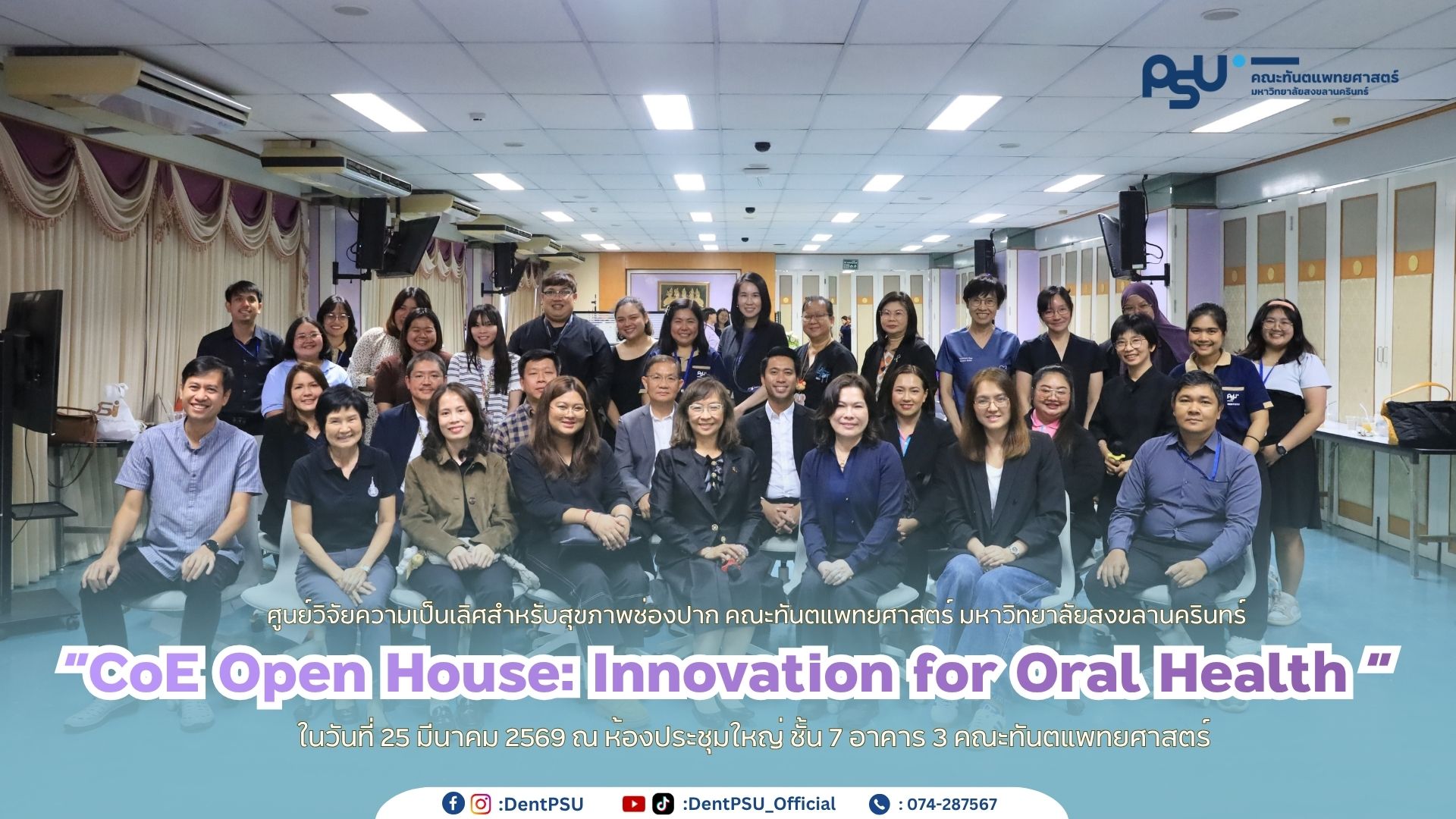
CoE Open House: Innovation for Oral Health เมื่อวันที่ 25 มีนาคม 2569
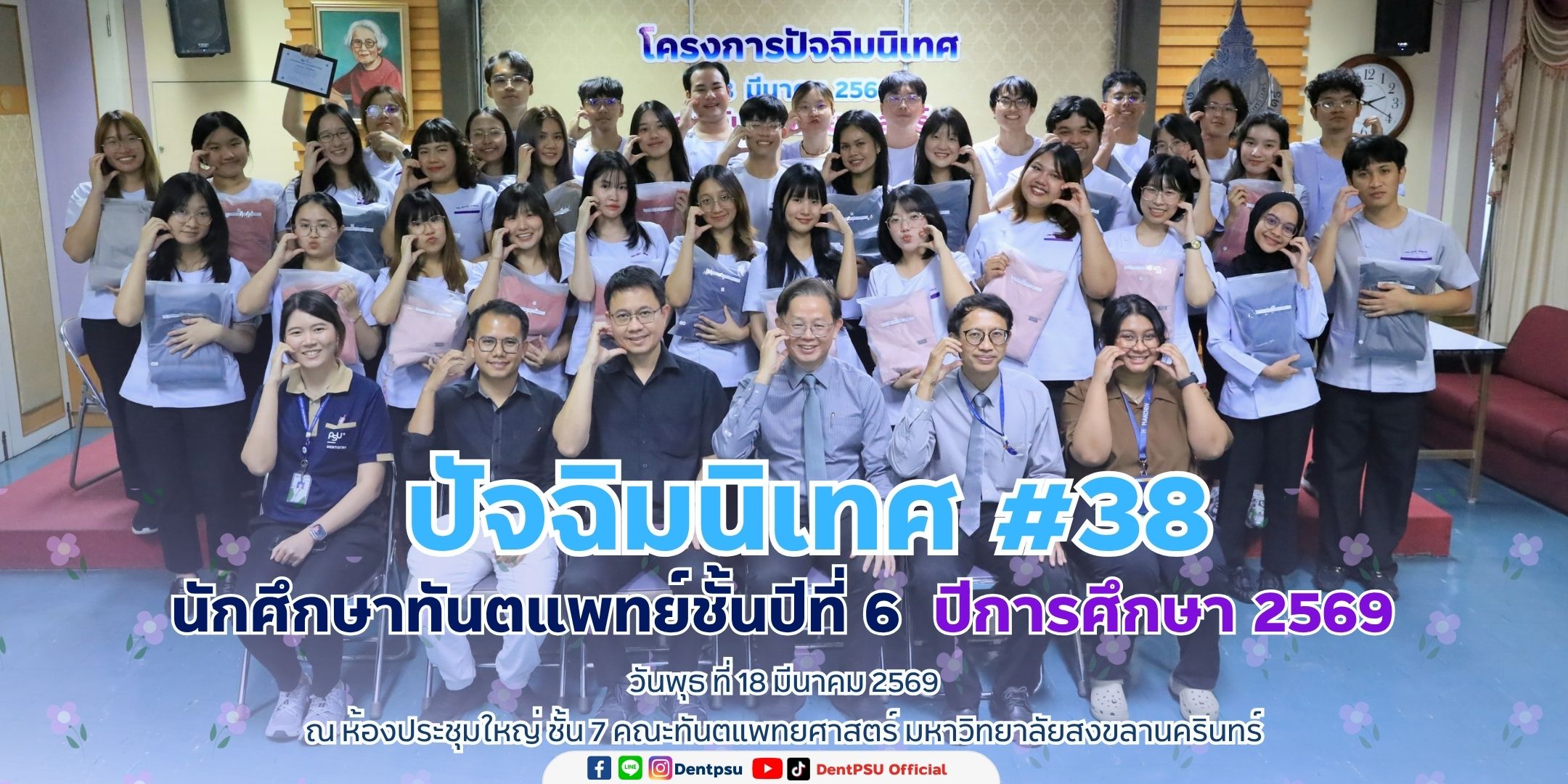
โครงการ ‘ปัจฉิมนิเทศนักศึกษาทันตแพทย์ รุ่นที่ 38’
4.3.3 Vocational training events (lifelong learning)
Host events at university that are open to the general public: executive education programmes (this refers to short courses for people who are not attending the university; this specifically excludes courses like MBA) and/or vocational training.
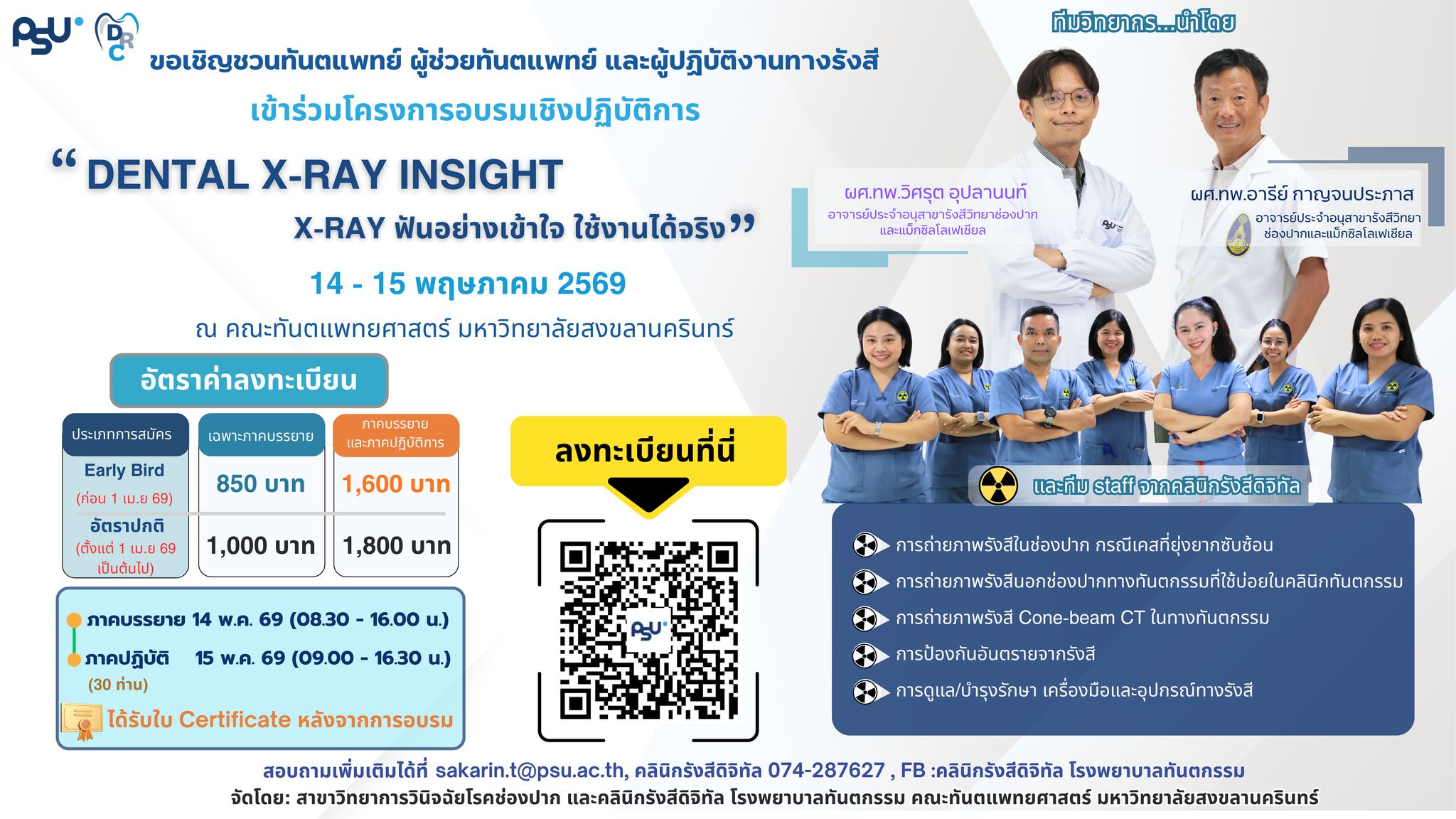
โครงการอบรมเชิงปฏิบัติการ ‘เปิดประสบการณ์ X-Ray ฟัน’ เพื่อพัฒนาทักษะเทคนิคการถ่ายภาพรังสีและการวินิจฉัยขั้นสูงให้กับทันตแพทย์ ในวันที่ 14–15 พฤษภาคม 2569
4.3.4 Education outreach activities beyond campus
Undertake educational outreach activities (e.g. tailored lectures or demonstrations) beyond campus – in local schools, in the community. This can include voluntary student-run schemes.
4.3.5 Lifelong learning access policy
A policy that ensures that access to these activities is accessible to all, regardless of ethnicity, religion, disability immigration status or gender.
4.4 Proportion of first-generation students
4.4.1 Proportion of graduates with relevant qualification for teaching